









By Iain Cole, Client Solutions Manager, Instep UK
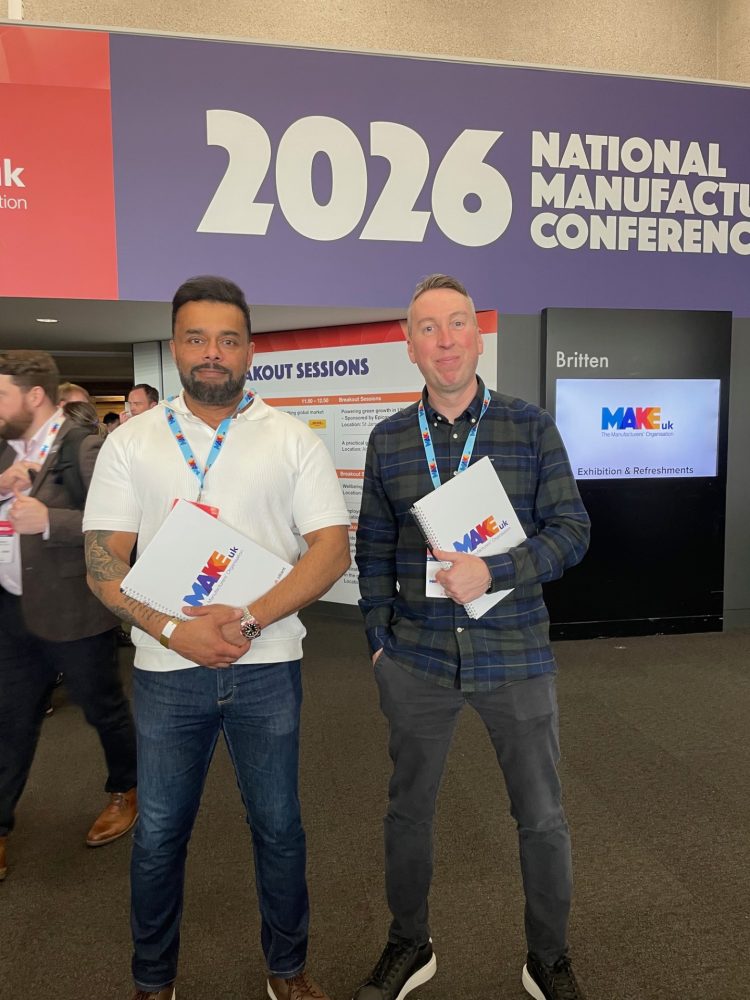
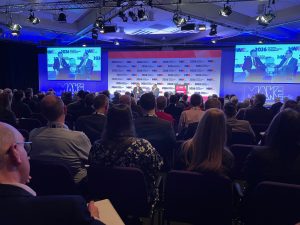
Last week, I attended the Make UK National Manufacturing Dinner and National Manufacturing Conference alongside my colleague, Instep Client Director Kartik Bhatt. Over the two days, we heard from sector leaders including Make UK’s CEO Stephen Phipson and the Secretary of State for Business and Trade, Peter Kyle MP. We also took part in panel discussions, and spent valuable time speaking directly with manufacturers from across the UK.
What struck us most was how closely the keynote themes matched the challenges people raised in informal conversations. Across policy, operations, technology, and workforce issues, manufacturers were remarkably aligned, and in many cases, remarkably frank.
So, without further ado, here are the six biggest things we learned…
1. Manufacturers Are Ready to Move, but They Need Government to Meet Them Halfway
A recurring theme throughout the conference was the urgent need for a stable, long‑term Industrial Strategy. In his opening remarks, Make UK’s CEO Stephen Phipson highlighted that manufacturers had already shaped much of the plan and now needed delivery, not more consultation.
Many of the manufacturers we spoke to echoed this sentiment. Years of political turbulence have created uncertainty, delaying investment decisions and long‑term workforce planning. Businesses want to invest, but they need a strategy they can rely on.
2. Energy Costs Remain the Daily Pressure Point for Manufacturers
Whether in the keynotes or over coffee, one topic dominated… high energy prices. SMEs told us they feel the pinch most. Leaders described spiralling electricity costs as a barrier to both productivity and decarbonisation.
The Secretary of State, Peter Kyle MP, acknowledged this openly, referencing schemes designed to support high‑energy industries. But even with future support, the day‑to‑day reality is clear. Until the UK’s industrial energy costs come down, and grid access becomes faster and more reliable, manufacturers will continue to struggle with competitiveness.
3. The Skills Gap Is Growing Faster Than the Workforce Can Respond
The skills breakout session captured the issue in stark terms; a quarter of the manufacturing workforce is expected to retire within a decade, and 50% of vacancies in some areas remain unfilled.
What was most striking wasn’t just the data but the frustration. Employers told us the talent pipeline is squeezed at every stage:
- Not enough young people are choosing technical pathways.
- Existing qualifications don’t align closely enough with real job roles.
- Employers feel constrained by limited training flexibility.
Leaders from Siemens and Make UK spoke about the need for lifelong learning, new job architectures, and more agile training models, especially as automation and digitisation continue to reshape the sector.

4. Leadership & Management Capability Is Becoming a Critical Productivity Lever
One of the biggest insights (and one that strongly aligns with our work at Instep) is that manufacturers increasingly see leadership and management capability as their core skills gap.
In the skills session, we heard that:
- Leadership skills are now employers’ top priority.
- Many businesses rely on apprenticeships for upskilling simply because they’re the main funded option, not because they’re always the right format.
Throughout the day, manufacturers shared candid stories about the impact of leadership gaps on productivity, change management, retention, and wellbeing. For many, leadership capability is now seen not as an HR concern, but as a strategic investment.
5. Manufacturers Are Committed to Electrification and Sustainability, but Barriers Remain Significant
The electrification and green innovation sessions gave us a fascinating view of the sector’s ambition. We heard from businesses pioneering electric‑first factories, solar‑powered manufacturing, and smart energy systems. Schneider Electric’s Leeds facility, for example, has already achieved an 82% reduction in CO₂ emissions and major efficiency gains.
But conversations with manufacturers also revealed shared frustrations:
- Long grid‑connection queues
- Rising electricity costs
- Skills shortages in automation, electrification, and sustainability
- Confusing planning and infrastructure processes
National Grid’s planned £70 billion investment offers hope, but leaders made it clear that short‑term challenges threaten long‑term ambitions.
6. Workforce Wellbeing Is Quietly Becoming a Strategic Risk Factor
The wellbeing breakout session provided some of the most eye‑opening statistics of the conference. Work‑related ill health now affects 1.9 million people, over half due to stress, depression, or anxiety. Health‑related workplace deaths, often linked to long‑term exposure, far exceed safety incidents.
Manufacturers told us that recruitment and retention are increasingly being shaped by wellbeing expectations. Several noted that wellbeing risks are often symptoms of wider capability gaps, particularly leadership training, communication skills, and workload management.
It was clear that wellbeing is no longer just a compliance topic. It’s a productivity issue, a skills issue, and a business resilience issue.
Manufacturing is a Sector Full of Ambition, and Ready for Partnership
Walking away from the conference, Kartik and I were struck by the alignment between what we heard in the keynotes and what we heard on the ground. UK manufacturers are resilient, innovative, and deeply committed to growth; but they need a skills system, an energy system, and a policy environment that match that ambition.
At Instep UK, this only strengthens our focus: supporting manufacturers with practical, relevant, and flexible skills solutions that address the real challenges they’re facing right now, from leadership capability to technical upskilling and workforce resilience.
Want to talk skills strategy in your manufacturing business? Book a call today and we’ll chat it through.