











What if AI could help fix the Broken Rung?
By Annabel Hall, Talent & Organisational Development Specialist
About the Author

Annabel Hall is a strategic and commercial people development expert with a passion for unlocking performance through people. With a career spanning operational leadership at McDonald’s, global HR projects, and senior roles at Focus DIY, she brings a pragmatic, engaging, and results-driven approach to every conversation. Known for her straight-talking style and infectious energy, Annabel helps businesses build cultures that people want to grow with.
Over the last few years, I’ve spent much of my time designing and delivering leadership programmes for women, coaching future leaders, and helping organisations think about talent, capability and progression.
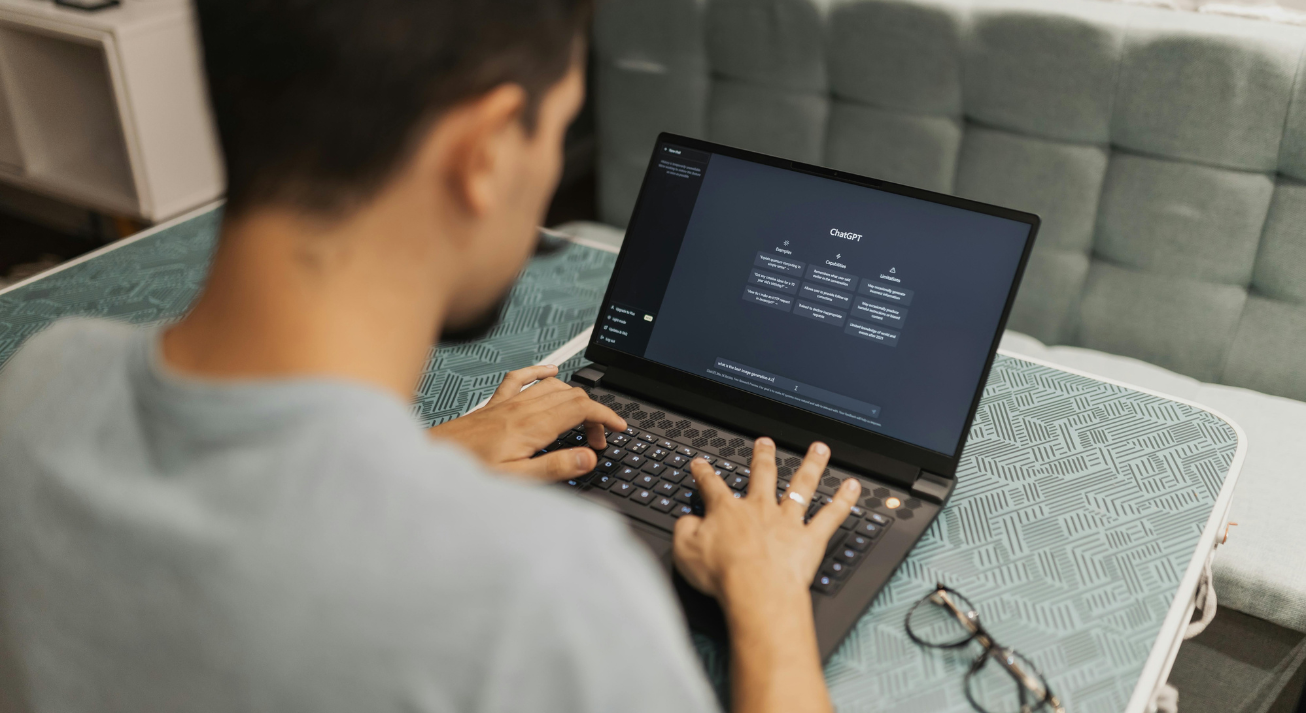
More recently, through my work with Instep UK, I’ve also found myself having a very different conversation: the conversation about AI.
At first glance, these might seem like completely separate topics. One is about technology. The other is about people. But the more organisations I speak to, the more convinced I become that the two are becoming deeply connected.
Because while many organisations are understandably focused on what AI might automate, I’m increasingly interested in a different question: What opportunities might AI create for women?
It’s an important question because women remain disproportionately represented in many administrative, coordination and operational support roles across organisations. These roles are often the backbone of a business. They keep teams organised, leaders effective, projects moving and customers supported. Yet they can also be the very roles where progression becomes difficult.
As someone who has spent years supporting women in leadership development, I’ve seen first-hand how talented, capable women can become trapped by their own success. They become indispensable. The person everyone relies on. The person who gets things done. And yet somehow the next opportunity never quite arrives.
This brings us to one of the most important pieces of research on women’s progression: the Broken Rung.
Research consistently shows that the biggest barrier to female progression isn’t reaching senior leadership. It’s securing that first move into management and more strategic roles. If women miss out at that stage, the gap widens throughout the leadership pipeline.
The challenge is that many women working in administrative and operational support functions can find themselves particularly exposed to this phenomenon. Not because they lack capability, but because organisations often continue to see them through the lens of the role they currently perform rather than the potential they possess.
This is where I think AI creates a fascinating opportunity.
For all the headlines about automation, what I’m seeing in practice is that the smartest organisations aren’t simply removing work. They’re redesigning work.
Tasks that once consumed hours can now be completed in minutes. Meeting notes, diary management, reporting, information gathering and routine communications are increasingly being supported by technology.
For some people, embracing that change can feel a little scary. If technology can suddenly do parts of your job faster than you can, why would you welcome it? But I think that perspective misses the bigger opportunity. The organisations gaining the greatest value from AI aren’t asking, ‘How do we replace people?’ They’re asking, ‘What more could our people contribute if repetitive activity was reduced?’ And that changes everything.
The future administrator is increasingly becoming a coordinator, communicator, influencer, workflow optimiser and operational enabler. Those aren’t simply administrative skills. They’re leadership skills. They’re exactly the kinds of experiences that build readiness for future management and leadership roles.
Of course, progression isn’t always straightforward for women. Many still experience what researchers describe as the Double Bind. If women are collaborative, empathetic and supportive, they are often liked but not always viewed as leaders. If they are decisive, challenging and assertive, they may be judged differently from their male counterparts demonstrating exactly the same behaviours. It’s an unfair tension that many women navigate throughout their careers. And it won’t disappear in an AI-enabled workplace.
If anything, as routine tasks reduce, the capabilities that become most valuable are influence, communication, visibility, stakeholder management and strategic thinking. The question therefore isn’t simply whether women can use AI. The question is whether organisations are helping women develop the confidence and capability to thrive in a workplace where these skills become even more important.
That’s why I believe workforce development matters more than ever. The biggest risk isn’t AI. The biggest risk is leaving talented people behind while work evolves around them.
The Future of Women in Leadership
At Instep UK, we’re exploring how development programmes can help women build the skills needed to succeed in an AI-enabled world. Not just digital and AI capability, but the broader skills that create progression opportunities: confidence, communication, strategic thinking, commercial awareness, influencing, stakeholder management and leadership presence.
Because future success won’t come from competing with technology. It will come from knowing how to work brilliantly alongside it. And if organisations get this right, AI could become something much more significant than a productivity tool.
It could become an opportunity to help more women step over the broken rung, navigate the double bind, and build careers that are more visible, influential and strategically impactful than ever before.