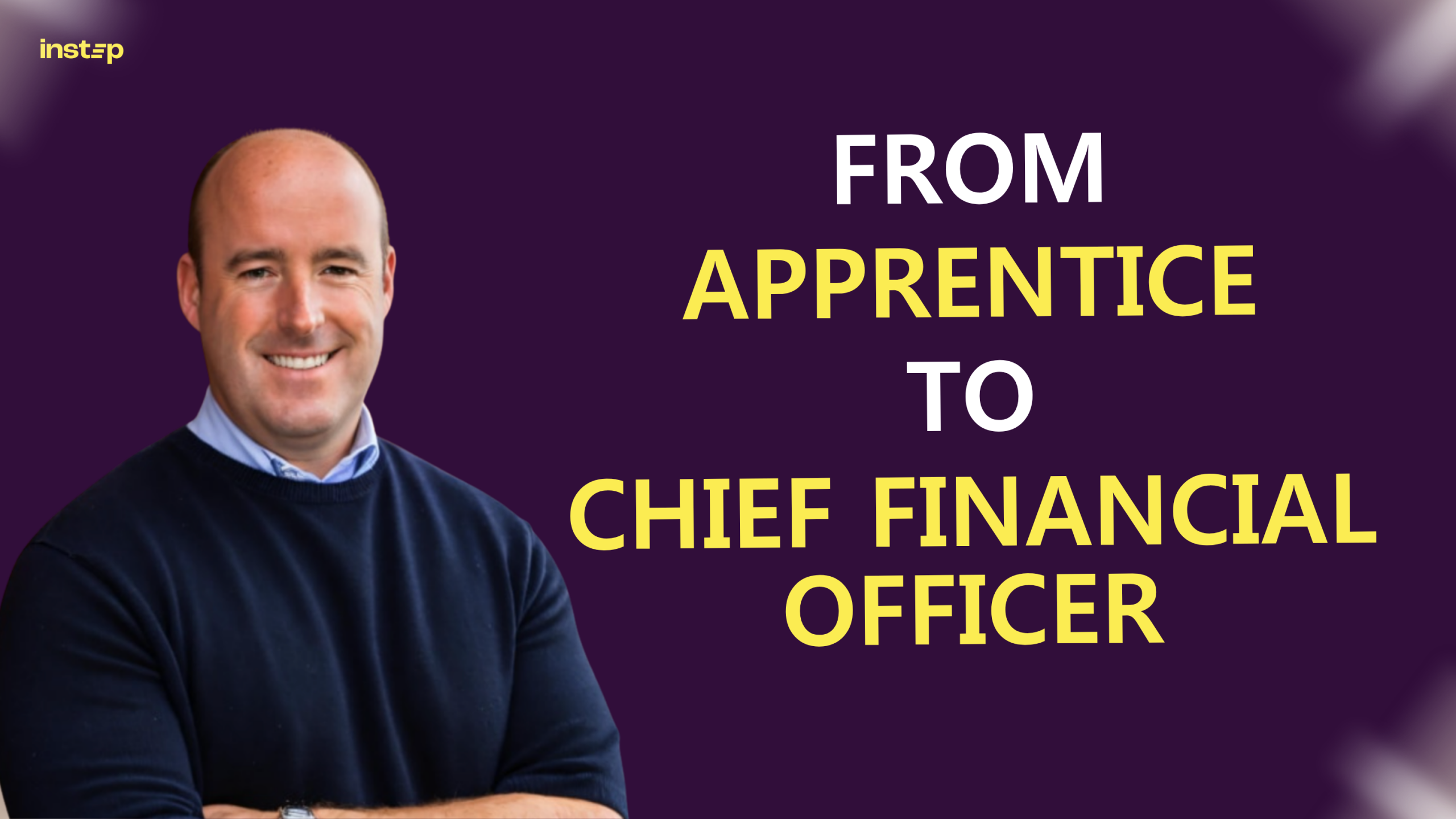



By Lauren Webb, CRO at Instep UK
Succession Planning Has Changed. Has Your Strategy?
For years, succession planning has been viewed as a practical exercise in organisational continuity. Identify critical roles, assess potential successors and ensure there is a plan in place when someone moves on.
While that approach still has value, it no longer goes far enough.
Today’s organisations are navigating a business environment shaped by rapid technological advancement, evolving workforce expectations, economic uncertainty and the growing influence of artificial intelligence. Leadership roles are changing faster than ever, and many of the skills required to succeed in the future are different from those that brought success in the past.
The challenge facing organisations today is not simply replacing leaders when vacancies arise. It’s developing people who can lead effectively in a world where change is constant and technology continues to reshape how decisions are made, teams collaborate and value is created.
As succession planning rises up the strategic agenda, organisations have an opportunity to shift their focus from role replacement to capability development.
AI Is Transforming Work, But People Will Provide the Advantage
There is understandable excitement about the potential of AI. From streamlining administrative tasks and automating workflows to generating insights from vast amounts of data, the opportunities are significant.
Yet as AI becomes more accessible, something interesting is happening.
The technology itself is becoming less of a competitive differentiator.
Most organisations now have access to the same tools, platforms and capabilities. Whether it’s Microsoft Copilot, ChatGPT or sector-specific AI solutions, the barriers to entry are falling quickly.
What will separate successful organisations from the rest is how effectively their people use these technologies.
AI can process information, identify patterns and generate recommendations. What it cannot replicate is human judgement, emotional intelligence, ethical decision-making, relationship building or the ability to inspire confidence during times of uncertainty.
These qualities are becoming increasingly valuable.
The leaders who will thrive over the next decade will not be those competing with AI. They will be those who understand how to work alongside it, combining technological capability with critical thinking, communication and strategic leadership.
The Shift From Successors to Future Leaders
Traditional succession planning often starts with a simple question: who could step into this role tomorrow if needed?
It’s a sensible question, but it can unintentionally focus organisations on today’s organisational structure rather than tomorrow’s challenges.
Many leadership positions will continue to evolve as technology changes the nature of work. Teams are becoming more distributed, decision-making is increasingly data-driven and transformation programmes have become a permanent feature of organisational life.
As a result, employers need to think beyond identifying direct replacements.
Instead, they should be asking whether they are developing individuals with the adaptability, curiosity and leadership capability needed to succeed in roles that may look very different in five years’ time.
Future-proof succession planning is about creating leadership capacity across an organisation. It focuses on nurturing talent that can respond to changing circumstances, embrace new technologies and lead others through uncertainty.
That requires investment in skills and behaviours, not just organisational charts.
The Two Capabilities Every Organisation Should Be Developing
The most effective succession strategies are increasingly focused on building two complementary forms of capability.
The first is AI fluency.
This doesn’t mean every future leader needs to become a technical expert. Rather, they need a practical understanding of where AI can create value, where risks exist and how technology can support better decision-making. They need the confidence to ask the right questions, challenge assumptions and make informed choices about how AI is used within their teams.
Alongside this sits an equally important capability: human leadership.
As automation becomes more prevalent, skills such as communication, collaboration, emotional intelligence, coaching, influence and strategic thinking become even more critical. These are the capabilities that enable leaders to build trust, align people around a shared vision and navigate the complexities that technology alone cannot solve.
Organisations that develop both capabilities together will be better positioned to adapt, innovate and grow.
Building Stronger Leadership Pipelines
For many organisations, one of the greatest opportunities lies in looking beyond their current leadership teams.
Emerging leaders, high-potential employees, early-career talent and aspiring female leaders often represent a significant source of untapped capability. With the right development opportunities, these individuals can become the foundation of a stronger and more diverse leadership pipeline.
This is particularly important as organisations consider the leadership challenges they are likely to face in the future. Diverse leadership teams bring broader perspectives, improved decision-making and a greater ability to understand the needs of customers, employees and stakeholders.
Succession planning therefore becomes more than a talent management process. It becomes a strategic lever for building organisational resilience and long-term performance.
The organisations that invest in future talent today will be far better prepared for the challenges and opportunities of tomorrow.
Turning Strategy Into Action
The good news is that developing future-ready leaders does not always require significant additional budgets.
Increasingly, organisations are using Apprenticeship Levy funding to strengthen succession pipelines while simultaneously building AI, data and leadership capability across the workforce.
When used strategically, levy-funded learning can help employers create structured development pathways that align directly with future business needs. Rather than treating leadership development, digital transformation and workforce planning as separate initiatives, organisations can bring them together as part of a single talent strategy.
At Instep, we’re seeing growing demand for programmes that help organisations build the confidence, capability and leadership skills required in an AI-enabled workplace.
Whether through AI Strategy & Opportunity Units, our Analytical Leaders programme, Leadership Excellence pathways or Future Leaders development programmes, employers are recognising that the strongest succession plans are rooted in continuous learning and capability building.
The Question Leaders Should Be Asking
The organisations best prepared for the future will not necessarily be those investing most heavily in AI technology.
They will be the organisations investing most effectively in their people.
As AI continues to reshape the workplace, succession planning must evolve from a reactive exercise into a forward-looking strategy that prepares organisations for what’s next.
The question is no longer:
“Who will replace today’s leaders?”
The more important question is:
“Are we developing leaders who can thrive in an AI-enabled world?”
Those that can answer “yes” will be building more than succession plans. They’ll be building the leadership capability, adaptability and resilience needed to succeed for years to come.
AI-fluent. Unmistakably human.
Ready to strengthen your succession pipeline?
Discover how levy-funded AI, data, leadership and transformation programmes can help your organisation develop future-ready leaders and create a stronger talent pipeline for the years ahead.
Contact Instep to start the conversation.