












By Lisa Khosla, Client Director at Instep UK
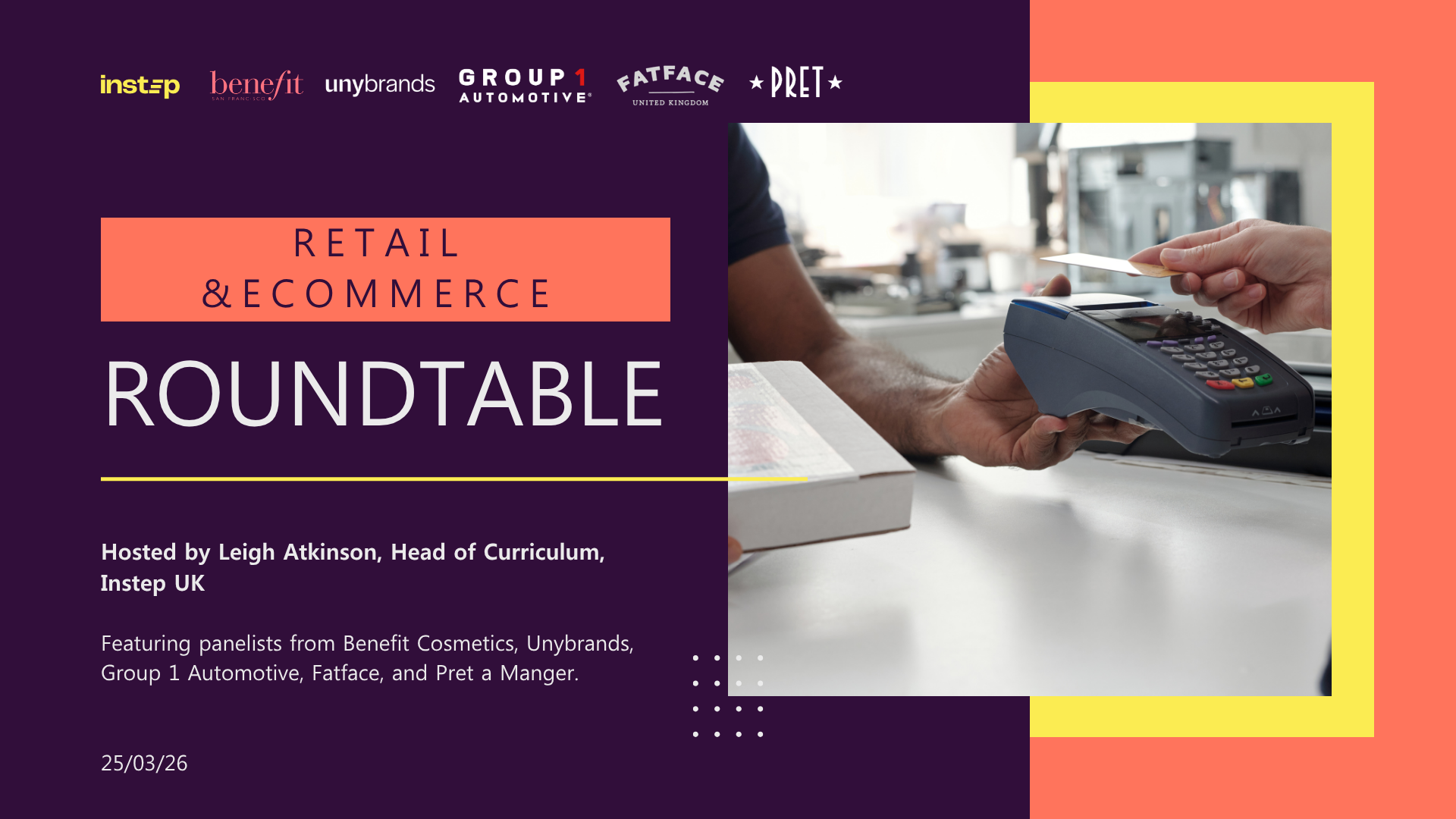
Last week’s Retail & E‑Commerce Roundtable left me feeling genuinely energised! Not just by the calibre of leaders in the (virtual) room, but by the shared honesty, vulnerability, and ambition that threaded our entire conversation together.
As someone who works closely with organisations across retail, beauty, hospitality, automotive and e‑commerce, I know how fast this landscape is moving. But hearing these senior leaders articulate both the pressures and possibilities in such a candid way reaffirmed what I’ve always believed, which is:
The future of our sectors will be shaped by the quality of our leadership and our willingness to adapt together.
Below are my reflections on the themes that surfaced most powerfully and the insights each of our brilliant panellists contributed.
1. The Pace of Change Has Never Been Faster (And Leaders Are Feeling It)
A recurring thread from every panelist was the sheer velocity of change.
Vay‑Linh Luu (Group 1 Automotive) captured it perfectly when she said the biggest challenge is “keeping up with the pace of change, adapting to that pace of change and bringing our workforce on that journey with us.”
In Group 1, she noted, leaders are now “going to see more change in the next two years than in the last couple of decades.” That sentiment felt universally accepted across industries represented.
Andrea Lansbury (Benefit Cosmetics) echoed this volatility:
“Things are moving quicker than ever… market instability, tariffs, geopolitical pressures, they all impact us. We need to be far more agile than a traditional three‑year plan allows.”
Across the board, the message was clear:
– Leaders must make faster decisions
– They must operate with incomplete data
– And they must do so while maintaining clarity for their teams
Emma Cogbill (Unybrands) articulated this beautifully:
“We need leaders who can navigate ambiguity and make high-stakes decisions without all the information, because things move too quickly to wait.”
2. Resilience is Now a Critical Leadership Capability
One of the most meaningful parts of the discussion centred on human resilience, not just for frontline colleagues, but leaders themselves.
Claire Stanojevic (FatFace) spoke with real empathy about the lived reality she sees:
“Pressure can be healthy and give us competitive advantage, but we’re seeing signs of burnout. We need to help people understand the difference between stress and pressure.”
This idea that resilience isn’t “coping” ,but consciously managing energy and expectations, resonated strongly.
Andrea also added a generational perspective:
“Pressure isn’t going away. We need to focus on resilience, not just wellbeing. Younger generations haven’t always needed that resilience; we must support them to build it.”
And Daksha Stancilas (Pret A Manger) reminded us leaders need support too:
“Leaders feel pressure alone sometimes. They’re managing upwards and downwards. They need the space and self‑care to think clearly.”
For me, this was one of the most important insights. Leadership development can’t be ignored, it is (and will remain) a business-critical infrastructure.
3. Customer Experience Is the Battleground Where Leaders Make the Biggest Impact
When asked where leadership capability has the biggest measurable effect, the answer was near-unanimous: customer experience.
Daksha summed it up simply:
“If our customers aren’t happy, they won’t come back.”
Whether that customer is a coffee drinker on the go, an online shopper, or a buyer at a dealership, the experience is what drives commercial outcomes, productivity, and engagement.
Andrea added a powerful warning:
“The customer now has the power to make or break an organisation. Their expectations are climbing, and we’re not always meeting them.”
This challenge is intensified by the shift to omnichannel retail, where physical and digital must feel equally intentional.
4. Communication & Alignment Are More Important Than Ever
In a hybrid and globally dispersed world, several panellists reflected on how alignment can easily drift.
Emma (Unybrands) shared that remote teams often feel disconnected:
“People weren’t clear on our goals or the direction of travel. Communication has become one of our biggest leadership challenges.”
To address this, she described introducing more all‑hands sessions, training groups, and peer support networks (something I know resonates across many organisations we work with).
Leadership today isn’t just about deciding; it’s more so about ensuring people understand why decisions are made and how their role contributes.
That “line of sight”, as Andrea described, is critical:
“People need to know how their work impacts the wider business.”
5. Leaders Are Torn Between Excitement and Fear of AI
Unsurprisingly, AI became one of the liveliest parts of the discussion.
Andrea’s stance was decisive:
“AI won’t take your job, but those who use AI will take the jobs of those who don’t.”
Vay‑Linh raised an unexpected barrier… permission:
“Some people feel like using AI is cheating. There’s a confidence issue and a culture issue.”
Claire touched on concerns around data safety, but also shared how accessible training was empowering teams:
“Our AI prompting workshop was the most-attended session I’ve ever run.”
And Daksha reminded us that fear of new technology isn’t new:
“When computers arrived, people were frightened. Now it’s normal. AI will follow the same path.”
What struck me most was that every panelist recognised AI’s potential, but also its emotional impact. And as leaders, we must help our teams navigate both.
6. Learning, Development and Apprenticeships Remain a Powerful Lever for Change
This is an area close to my heart, and it was affirming to hear how L&D continues to transform capability and culture.
Claire spoke warmly about having completed an Instep apprenticeship herself and now championing development within FatFace.
Daksha highlighted how Pret’s female leadership apprentices all graduated successfully, which is a testament to the power of structured, supported development.
And across all sectors, the message again was clear:
– People want to grow
– Organisations must invest in structured development
– Apprenticeships deliver real, measurable ROI
For me, this reinforces the responsibility we have as Instep: to partner with organisations in a way that is human, strategic and deeply aligned to real-world challenges.
Final Reflection: Leadership Must Evolve, But We Don’t Have to Do It Alone
If I were to summarise the spirit of the roundtable in one sentence, it would be this:
We are all facing the same challenges, and our biggest opportunity is to learn from one another.
From resilience and wellbeing, to AI readiness, to customer-centricity, to communication, to agility, every leader in the session reinforced that we cannot meet these challenges with old tools or isolated thinking.
As I said in my closing remarks during the event:
“We absolutely love working with our partners. The openness and honesty you brought today is exactly why these conversations matter so much.”
I’ll be honest, I left the roundtable feeling quite proud.
Proud of our partners, proud of Instep, and proud of the shared commitment to creating workplaces where leaders are empowered, prepared, and ready for what comes next.