











By Carly Bradshaw, Associate Trainer, Instep UK.
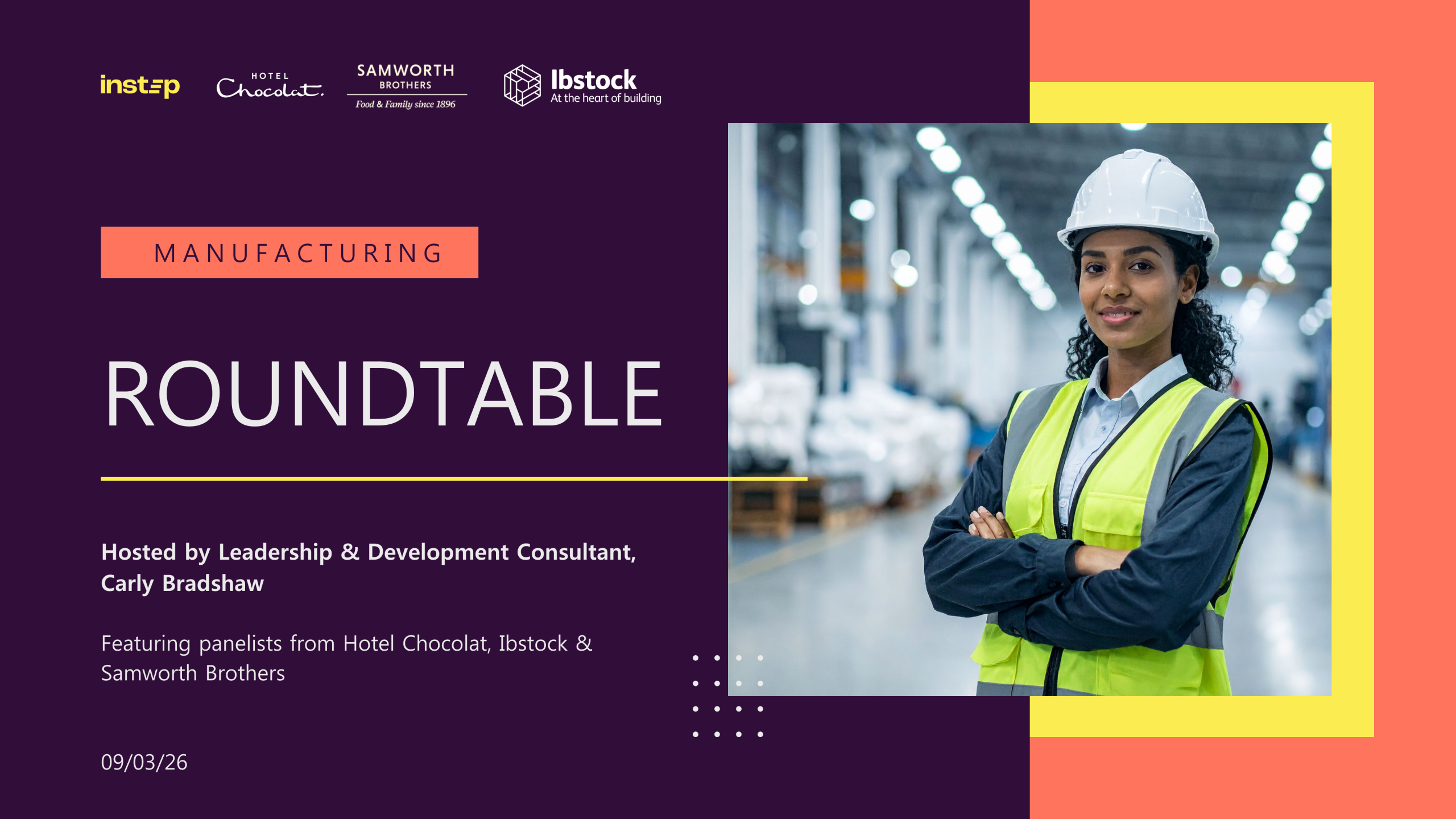
Manufacturing leadership is shifting rapidly. Recently I hosted a roundtable with senior leaders from across the manufacturing sector to explore how the role of the manufacturing manager is changing and what strategies are working.
The conversation reinforced something I see repeatedly when working with operational leaders: the expectations placed on managers within manufacturing leadership roles are evolving faster than ever.
Why Manufacturing Leadership Is Changing So Quickly
Manufacturing organisations are currently navigating a complex mix of challenges.
Recruitment and succession planning remain ongoing concerns, with many businesses facing an ageing workforce while also trying to attract and develop new talent. At the same time, technological advancements are reshaping production environments, requiring organisations to continually adapt their processes, systems and capabilities.
All of this is fundamentally changing what it means to lead in manufacturing, and redefining expectations of manufacturing leadership at every level.
The Shift From Technical Expertise to People Leadership
Traditionally, many managers have progressed through linear career paths. Individuals often move into leadership roles because they are technically strong or highly capable operationally.
While this progression has long been common across the sector, technical expertise alone doesn’t necessarily prepare someone for the realities of managing people within modern manufacturing leadership.
Without the right support, many managers find the transition from operational expert to people leader challenging. The role requires a completely different skillset.
Instead of focusing solely on solving problems or delivering production targets, managers are now expected to influence behaviours, communicate effectively, develop their teams and create the conditions for others to succeed.
Data Skills Are Now Essential in Manufacturing Leadership
Alongside this shift, data is becoming an increasingly important part of operational leadership. Managers are expected to interpret performance data, understand operational metrics and use insights to drive efficiencies and improvements on the shop floor.
For many leaders who have built their careers through hands-on operational experience, this represents another new capability they must develop as part of effective manufacturing leadership.
Leading Change: The Biggest Capability Gap
However, one of the most significant capability gaps that emerged from the discussion was the ability to lead change effectively.
Manufacturing organisations are experiencing an unprecedented pace of change. Whether driven by technology, workforce challenges, operational transformation or wider economic pressures, change is becoming a constant feature of the sector.
Yet while change may be designed at a strategic level, it is operational managers who ultimately determine whether it succeeds or fails. This is where manufacturing leadership becomes critical.
Managers are the ones responsible for translating strategy into everyday behaviours. They communicate change to teams, build understanding, address concerns and embed new ways of working. If they lack the confidence or skills to lead through change, even well-designed initiatives can struggle to gain traction. Resistance, disengagement and cultural friction can quickly emerge.
What Manufacturing Leaders Need Now
This is why investing in leadership capability can no longer be an afterthought.
Several approaches are becoming increasingly important in supporting manufacturing managers, and strengthening manufacturing leadership more broadly:
- Developing a continuous improvement mindset
- Strengthening data-driven decision making
- Creating opportunities for peer learning and shared experience
- Delivering practical leadership development programmes grounded in operational reality
- Building capability in coaching, mentoring, and developing people
- Helping managers understand the “why” behind decisions so they can guide teams through change
Manufacturing Leadership Must Be Practical and Relevant
What the roundtable reinforced for me is that leadership development in manufacturing must be practical, relevant and directly connected to the challenges managers face every day.
When organisations invest in building confident, capable leaders, the impact goes far beyond individual development. Strong manufacturing leadership enables organisations to embed change more effectively, engage their workforce and sustain operational performance in an increasingly complex environment.
As the pace of change across the sector continues to accelerate, the organisations that prioritise developing their managers today will be far better positioned for the challenges ahead, and far stronger in their manufacturing leadership capability.