










Addressing the Gap of Women in Leadership
The challenge: unlocking leadership potential
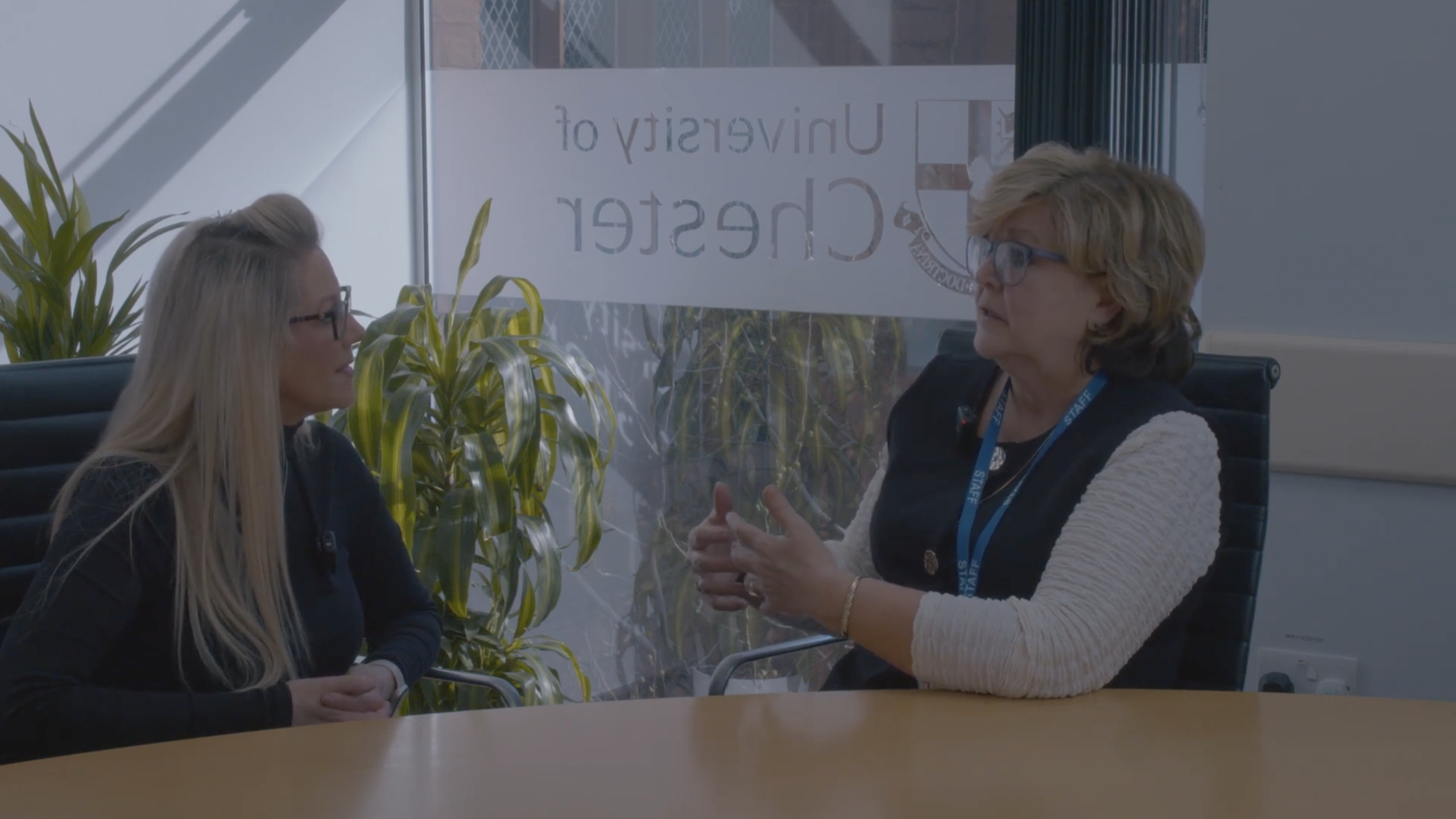
When Stacey Roe, Client Solutions Manager at Instep UK, first sat down with the team at the University of Chester, the brief wasn’t to deliver a programme, it was to understand a challenge.
In conversation with Donna Allen, HR Business Partner, a clear picture emerged. The university had a strong commitment to developing its people, but it also recognised that building a sustainable leadership pipeline required a more intentional approach.
As Rashmi Patel, Executive Director of HR explains, succession planning is something the organisation has to be “really intentional about… it’s not just going to happen.” There was clear potential, particularly among women in the workforce, but also a gap in how that potential was being supported to translate into confident leadership. “We had a gap in this space, in terms of women’s leadership,” she reflects.
The approach: a partnership that works in context
What followed was not the rollout of a standard solution, but the development of something shaped in partnership.
For Donna Allen, that relationship has been critical from the outset. “I think it’s essential to work closely with the provider because we are all aiming for the same goals,” she explains. “Only by working closely together can we support each other to make sure that the apprentices are getting what they need.”
That shared intent created the conditions for a more responsive approach; one that adapted to the university’s academic cycle, operational pressures and organisational culture. Rather than fitting the university into a fixed model, the programme evolved around its needs.
“It’s been a really good partnership,” Donna adds. “The approach has made it easy for us to work together, being responsive and flexible to some of the challenges that we’ve had to face.”
Crucially, this flexibility extended beyond logistics. It was about shaping an experience that reflected how the university actually works. “It’s about understanding what we need, how we operate, and then adapting the programme to suit,” she says – something she points to as “key to the success so far.”
The experience: building confidence through real application
For learners like Beth Donnelly, Student Engagement & Support Senior Officer, the impact has been both immediate and deeply personal.
Before starting the programme, she describes a lack of confidence when it came to stepping into leadership. “I had doubts and insecurities about leading groups and projects,” she says. “I felt I didn’t have the skills or the knowledge to do it.”
Through the programme, that changed in a practical and tangible way. “I’ve learned a whole lot of really helpful tools for motivating people, organising projects and showing the value and impact of what I do,” she explains. “And that’s really boosted my confidence.”
What makes that shift meaningful is the ability to apply learning in real time. Whether navigating change, managing competing priorities or influencing stakeholders, the programme has equipped participants with “tools and approaches to manage that differently”, enabling them to communicate more effectively and lead with greater clarity.
The results: confidence, progression and capability
The growth in confidence is translating directly into action.
Reflecting on her own experience, Beth describes how her perception of what was possible began to change. “I had an opportunity to apply for a new role, and I wouldn’t have thought I could do this previously. But even after eight months, I was like, yeah, I can do this.”
That shift has brought with it a willingness to step forward and embrace challenge. “I feel brave enough to try… try and fail and try and improve. I felt like, yeah, I could handle this.”
Across the organisation, similar changes are becoming visible. As Sarah McGrath, Director of Partnerships in the School of Education, observes, participants are showing up differently in their roles, becoming “more open, more confident, broader with their examples and their perspectives.”
These individual stories are contributing to wider organisational outcomes. The university has seen “a number of promotions out of our apprenticeship population,” alongside stronger day-to-day performance, with individuals bringing greater insight and rationale into their work.
A wider impact: strengthening the talent pipeline
For Rashmi Patel, the value of this approach goes beyond individual development.
“It helps us build capabilities of women who are here, but also helps build our internal talent pipeline,” she explains. By supporting individuals in a structured way, the university is preparing them for “their next promotion, their next big opportunity.”
This is not just about progression in the moment, but about long-term organisational resilience, ensuring there is a pipeline of capable, confident leaders ready to step forward when needed.
Looking ahead: expanding opportunity
With strong foundations in place, the focus now is on extending that impact further.
Donna Allen highlights the importance of reaching those who may not yet see themselves as leaders: “People who perhaps are aspiring managers but don’t have the confidence, or don’t see that they have the transferable skills.” Creating opportunities for these individuals will be key to sustaining momentum.
As Sarah McGrath notes, when development is embedded in real work, the readiness follows naturally: “By the time that next step comes for them, they’re ready for it.”
Lasting change through partnership
What defines this work is not just the outcome, but how those outcomes have been achieved.
Through a collaborative, responsive approach, one grounded in listening, adaptability and shared goals, development has become part of how the University of Chester grows its people.
The result is a culture where individuals are supported not only to learn, but to apply, to reflect and to step forward with confidence.
Or, as Beth Donnelly puts it simply, it’s the moment where something shifts, and you realise:
“Yeah, I can do this.”